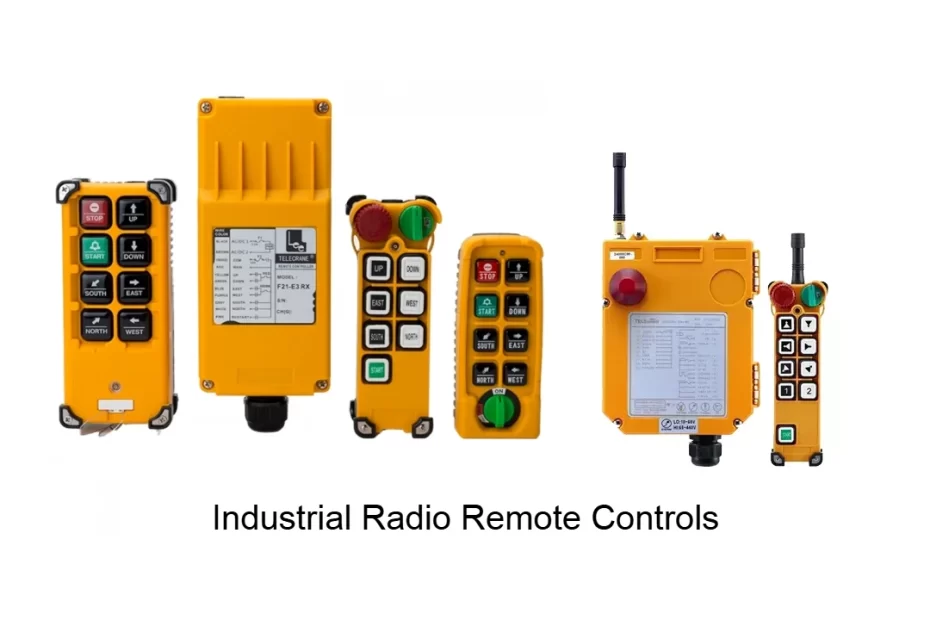
The safety of working with cranes, hoists, winches and heavy construction equipment is paramount in the construction, materials handling, manufacturing, steel plant operations, port activities and infrastructure projects. When there are suspended loads, uncontrolled load movements or poor visibility while using this equipment, there will be the potential for serious injury or expensive downtime.
How Radio Remote Controls Improve Safety for Crane, Hoist, and Construction Equipment Operators
Radio remote control systems offer a critical safety solution for cranes and hoists, providing a way for operators to remotely control equipment from a safe distance. This article explores how radio remote control systems improve the level of safety for workers in industrial and construction settings.
1. Safe Remote Operation of Cranes and Hoists
In the past, crane operators had to work close enough to either their load (which could fall) or the control panel (where they are susceptible to getting hit by moving machines). With radio remote controls allowing the operator to maintain a safe distance, as well as having all of the operating controls, it has provided the operator with more safety and operational capability.
Safety benefits include:
- Reduced exposure to suspended loads
- Safer operation of EOT cranes, gantry cranes, and jib cranes
- Lower risk of injury during hoisting and material handling
Remote operation ensures workers stay out of high-risk zones on construction sites and factory floors.
2. Better Load Visibility and Precise Control
With the ability of the operator to use wireless remote control systems to operate the lift devices (hoists/cranes), the operator no longer has to stand still in a designated area, but can move around freely for the best line of sight, which is especially important for tower cranes, mobile cranes, and construction lifts because of limitations with visibility.
Improved visibility results in:
- Accurate load positioning
- Reduced collisions with structures or personnel
- Enhanced coordination between crane operators and ground staff
This level of control is essential for safe lifting operations.
3. Emergency Stop for Instant Safety Response
Technology has improved for operators of cranes and construction equipment through modern radio remote controls, which have built-in, highly reliable emergency stop buttons (E-Stops), enabling immediate shutdown of the equipment/reducing/eliminating the chance for personnel to come to any harm due to unsafe movement or equipment malfunction.
Key safety advantages:
- Immediate shutdown during emergencies
- Prevention of load drops or uncontrolled motion
- Increased operator confidence in high-risk lifting tasks
Emergency stop functionality is a vital safety feature in crane and hoist operations.
4. Reduced Operator Fatigue on Construction Sites
Physical stress and mental fatigue caused by operating a crane or hoist for an extensive period will reduce the operator’s ability to operate safely, by reducing the number of awkward positions, and the number of times the operator has to manually apply/put pressure/force against an object.
Benefits for operators include:
- Comfortable handheld control
- Reduced physical stress during long shifts
- Lower chances of human error
Less fatigue means safer and more consistent crane and hoist operation.
5. Secure and Interference-Free Radio Communication
Current industrial radio remote control systems for hoists and cranes now use secure coding and stable radio frequency operation to assure interference-free operation regardless of how busy the construction site is.
Safety features include:
- Unique transmitter-receiver pairing
- Signal loss protection with automatic stop functions
- Reliable performance in high-interference environments
These features prevent accidental or unauthorized equipment movement.
6. Elimination of Cable-Related Hazards
Unlike controlling cranes using pendant controls, which operate using long cable connections that create tripping hazards, or electrical hazards, wireless crane remote controls do not create any tripping hazards or electrical hazards due to the lack of cables.
This improves site safety by:
- Reducing trip and fall accidents
- Eliminating cable wear and electrical faults
- Creating a cleaner and safer work area
This is especially beneficial on dynamic construction sites.
7. Improved Compliance with Construction and Industrial Safety Standards
Radio remote controls support compliance with industrial safety regulations and construction safety norms by minimizing human exposure to hazardous zones.
Using radio remote control systems demonstrates:
- Commitment to worker safety
- Adoption of modern lifting safety technology
- Alignment with global crane and hoist safety practices
Radio remote controls for cranes, hoists, and construction equipment play a vital role in improving industrial safety. By enabling safe remote operation, better visibility, emergency control, and reduced operator fatigue, these systems significantly lower the risk of accidents on construction sites and in industrial facilities.
For companies involved in crane manufacturing, material handling, infrastructure development, or heavy equipment operation, investing in radio remote control technology is a smart step toward safer, more efficient operations. Radio Enquiry for Radio Remote Controls at Best Price in India